

Variant Insurance Group is a licensed independent insurance agency in Minnesota. [CONFIRM license #.]
Get a Quote
Variant Insurance Group is a licensed independent insurance agency serving Minnesota families and businesses.
From our office in Maple Plain, our team works with many of Minnesota's top-rated carriers so your home, auto, life, and business coverage fits your real needs. We serve families and businesses across Minnesota.
New title
New title
Lafayette sits in one of the most flood-prone corridors in the United States, and the scars from 2016 still shape how property owners think about risk. Whether you're dealing with a home near Coulee Mine, a commercial building off the Vermilion River, or a property that's flooded more than once, understanding your flood insurance options isn't optional here: it's essential. Lafayette property owners need to know how drainage patterns, elevation data, repetitive loss designations, and the choice between NFIP and private flood policies all affect what you'll pay and how well you're protected. The stakes are real. A single inch of floodwater can cause more than $25,000 in damage to a typical home. And in a parish where heavy rain can overwhelm coulee systems in hours, the question isn't whether flooding will happen again: it's when. This guide breaks down the specific risks Lafayette property owners face and the coverage decisions that can make or break your financial recovery after a flood event. Getting this right means understanding your property's history, your neighborhood's drainage, and the policies available to you right now.
Understanding Lafayette's Unique Flood Landscape
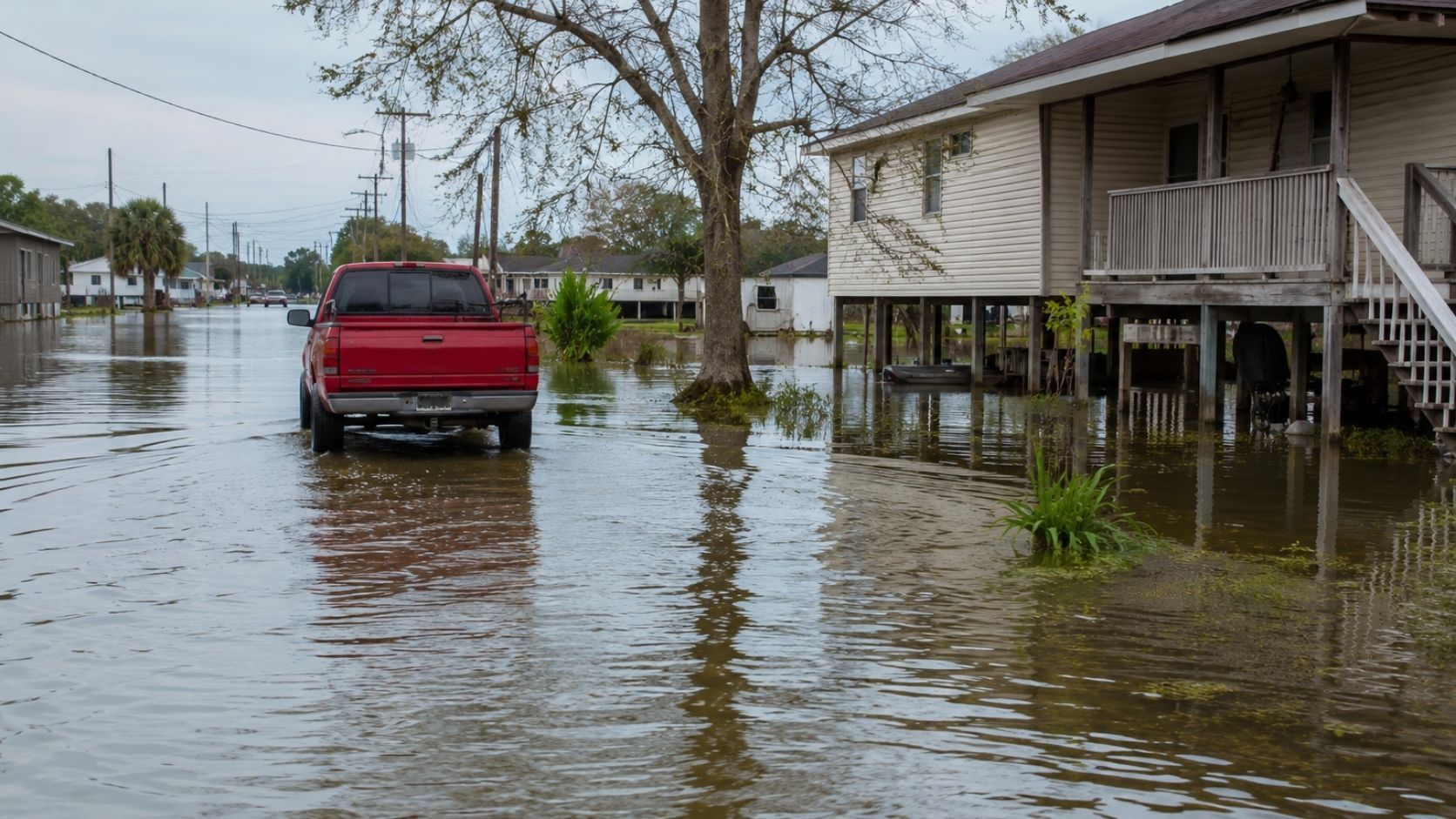
Lafayette Parish doesn't flood the way coastal communities do. Storm surge isn't the primary threat here. Instead, the risk comes from intense rainfall events that overwhelm an aging drainage infrastructure, backwater from swollen rivers, and flat terrain that holds water for days. The parish's geography means water has nowhere to go quickly, and even moderate storms can push neighborhoods into crisis.
Lafayette has retained its Class 7 Community Rating System (CRS) designation, which gives eligible residents and business owners a 15% discount on NFIP flood insurance premiums. That's a meaningful savings, but it only helps if you actually carry a policy. And many property owners who've never flooded assume they don't need one: a dangerous bet in this part of Acadiana.
Lessons from the 2016 Great Flood
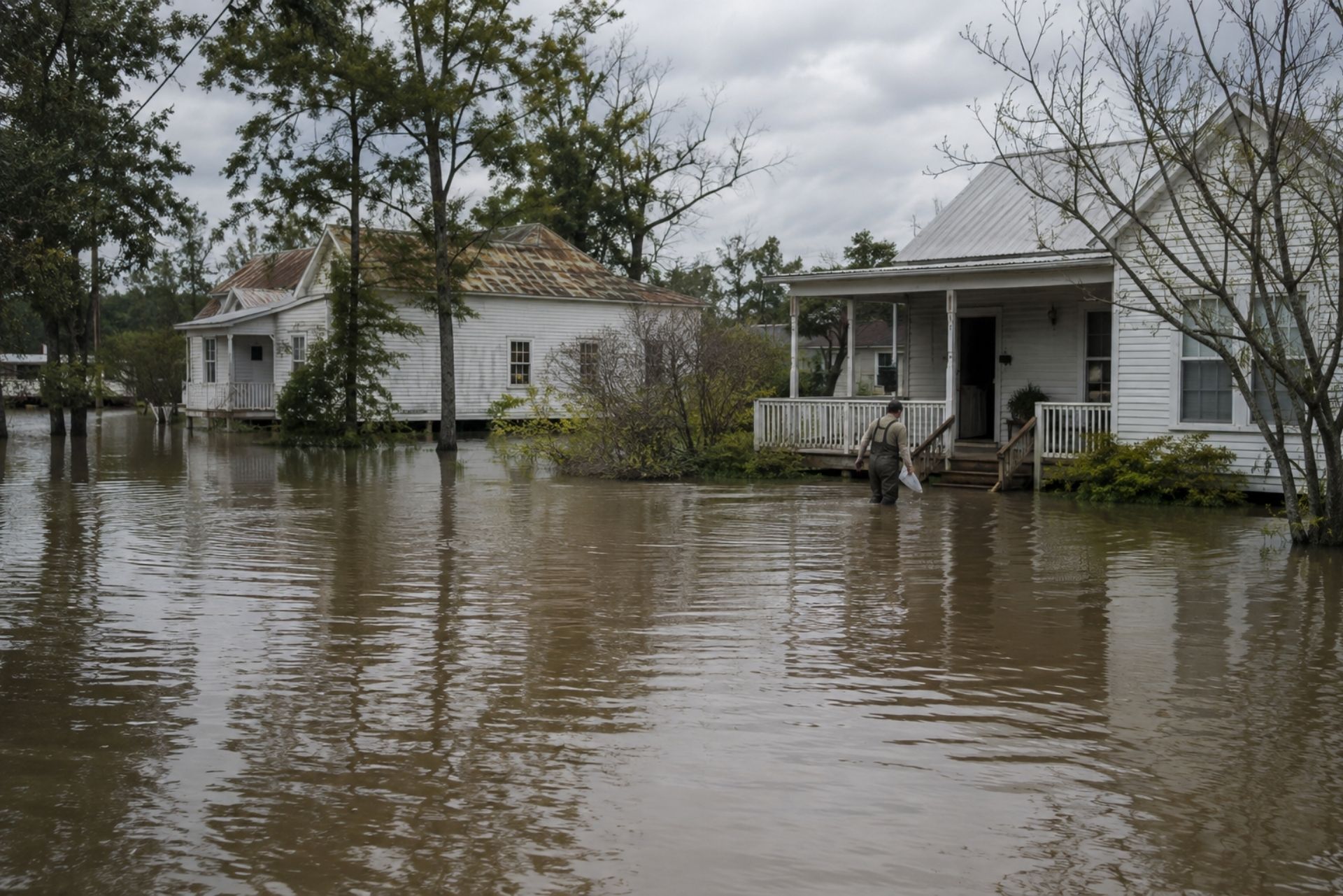
The August 2016 flood rewrote everything Lafayette thought it knew about flood risk. Over 20 inches of rain fell in roughly 48 hours, and thousands of homes that had never taken on water were suddenly submerged. Entire subdivisions in south Lafayette, areas well outside the mapped 100-year floodplain, experienced two to four feet of standing water.
The event exposed a painful truth: FEMA flood maps hadn't kept pace with development and drainage changes. Properties classified as "minimal risk" flooded catastrophically. Many homeowners carried no flood insurance at all because their lender didn't require it. The result was billions in uninsured losses across the region, and Lafayette bore a disproportionate share.
One lasting impact is that the 2016 flood forced a reckoning with how the parish plans for future events. The 2026 Lafayette Parish Hazard Mitigation Plan update reflects lessons learned, including better modeling of rainfall-driven flooding that doesn't follow traditional riverine patterns.
The Role of the Vermilion River Drainage System
The Vermilion River runs directly through Lafayette, and its behavior during heavy rain events dictates flood outcomes for thousands of properties. The river's relatively flat gradient means it drains slowly. When upstream rainfall combines with local storms, the river rises and stays high, backing water into tributaries and coulees throughout the parish.
Properties within a mile of the Vermilion don't need to be in a mapped floodplain to face serious risk. The river's backwater effect can push water into neighborhoods through connected drainage channels, and it often takes days for levels to recede. Understanding Lafayette's flood hazard levels and how they relate to your specific location along the Vermilion system is critical for making smart insurance decisions.
Hidden Risks: Coulee Backwater and Repetitive Loss
Lafayette's flood risk isn't just about the big river. The coulee system that threads through residential and commercial areas creates a secondary layer of exposure that many property owners underestimate. These smaller drainage channels can turn into flood highways during heavy rain.
How Local Coulees Impact Inland Properties
Coulees like Coulee Mine, Coulee Ile des Cannes, and Isaac Verot Coulee serve as the parish's primary stormwater arteries. During normal rain, they work fine. During intense events, they overflow their banks and back water into adjacent properties, sometimes blocks away from the channel itself.
The problem compounds when downstream coulees are already full from Vermilion River backwater. Water entering the system from local rainfall has nowhere to discharge, so it pools in low-lying areas. If your property sits near a coulee confluence or in a low spot between two drainage channels, your actual flood risk may be significantly higher than your FEMA zone suggests. This is exactly the kind of localized risk that a knowledgeable local agent can help you evaluate, rather than relying solely on a flood map that may be years out of date.
Managing Repetitive Loss Properties in Acadiana
A repetitive loss property is one that has received two or more NFIP claim payments of more than $1,000 within any 10-year period. Lafayette has a significant number of these properties, many of them concentrated near coulees and in areas that flooded in both 2016 and subsequent events.
If your property carries a repetitive loss designation, it affects your insurance options in several ways. NFIP premiums on these properties tend to be substantially higher. FEMA may also target these properties for mitigation grants, including elevation or buyout programs. Knowing your property's claim history before you buy or renew a policy is essential: it directly impacts what you'll pay and what options are available to you.
The Lafayette Floodplain Management Authority tracks local mitigation efforts and can be a resource for property owners dealing with repetitive loss issues.
Elevation Certificates and Rating Your Risk
Your property's elevation relative to the Base Flood Elevation (BFE) is one of the single biggest factors in your flood insurance premium. An elevation certificate documents this relationship with precision, and it's a document every Lafayette property owner should have on file.
Why Elevation Certificates Still Matter Under Risk Rating 2.0
FEMA's Risk Rating 2.0 methodology, which replaced the old rating system, uses more data inputs than ever before: distance to water, flood frequency, building characteristics, and cost to rebuild. Some people assumed this meant elevation certificates would become irrelevant. That hasn't happened.
An elevation certificate can still reduce your premium if it shows your lowest floor sits above the BFE. For properties in higher-risk zones, the savings can run into hundreds or even thousands of dollars annually. The certificate costs between $300 and $600 from a licensed surveyor, and it often pays for itself within the first policy year.
If you're buying a property in Lafayette, request the elevation certificate before closing. If you already own and don't have one, getting a survey done is one of the smartest insurance investments you can make. Agencies like Chabert Insurance: The Ehrhardt Agency regularly help clients interpret their elevation data and match it to the best available policy structure.
Comparing Flood Protection Options
The choice between NFIP and private flood insurance isn't one-size-fits-all. Each has distinct advantages depending on your property type, risk level, and coverage needs.
| Feature | NFIP | Private Flood |
|---|---|---|
| Max Building Coverage (Residential) | $250,000 | $1M+ available |
| Max Contents Coverage | $100,000 | Varies by carrier |
| Replacement Cost on Contents | No (actual cash value) | Often available |
| Loss of Use Coverage | Not included | Often included |
| Waiting Period | 30 days | As low as 10-14 days |
| Basement Coverage | Very limited | More options |
| CRS Discount Eligible | Yes (15% in Lafayette) | No |
Private flood policies can fill gaps that NFIP leaves open, especially for higher-value homes or commercial properties. But NFIP policies carry the backing of the federal government and qualify for CRS discounts. Many Lafayette property owners benefit from carrying one or the other: some even layer private excess flood on top of an NFIP base policy.
NFIP Versus Private Flood: Which Makes Sense for Your Property?
Your decision should start with your property's value and your specific risk profile. If your home is valued under $250,000 and you're in a CRS-participating community like Lafayette, the NFIP often provides the most cost-effective option, especially with that 15% CRS discount applied.
For homes valued above $250,000, or for properties that need loss-of-use coverage, replacement cost on contents, or higher limits, private flood carriers typically offer better terms. Commercial property owners in particular should look at private options, since NFIP commercial limits ($500,000 building/$500,000 contents) may fall short for larger operations.
The Transparency Act of 2026 has changed how renewal notices look, giving policyholders clearer breakdowns of what they're paying for. This makes comparison shopping between NFIP and private options easier than it's ever been.
Frequently Asked Questions About Lafayette Flood Coverage
Do I need flood insurance if I'm not in a flood zone? Yes, you should strongly consider it. Over 25% of NFIP claims come from properties outside high-risk zones. The 2016 flood proved that Lafayette properties in X zones can flood severely.
How long does it take for a flood policy to go into effect? NFIP policies have a standard 30-day waiting period. Private flood policies may activate in as few as 10-14 days, depending on the carrier.
Can I switch from NFIP to private flood insurance? You can, but time the transition carefully. Make sure your private policy is active before canceling NFIP coverage, and confirm your lender accepts the private policy.
Will my flood insurance premium go up every year? Under Risk Rating 2.0, premiums are adjusting to reflect actual risk. Some properties see increases capped at 18% annually, while others may see decreases. Your elevation and proximity to water sources are key factors.
Does my homeowners insurance cover flooding? No. Standard homeowners policies in Louisiana exclude flood damage entirely. You need a separate flood policy, whether through NFIP or a private carrier.
What's the difference between a flood zone and actual flood risk? Flood zones are FEMA's mapped designations based on historical and modeled data. Actual risk can differ significantly due to local drainage, development changes, and rainfall patterns that maps don't fully capture.
How Hazard Mitigation Plans Affect Your Coverage Options
Lafayette Parish and surrounding communities regularly update their hazard mitigation plans, and these documents influence everything from local building codes to insurance availability. The St. John the Baptist Parish Hazard Mitigation Plan offers a useful comparison for how neighboring parishes approach similar challenges.
Properties in communities with strong mitigation plans and active CRS participation tend to have better insurance options and lower premiums. Lafayette's ongoing investment in drainage improvements and floodplain management directly benefits property owners through these programs.
Common Mistakes Lafayette Property Owners Make with Flood Policies
The most frequent error is assuming a flood zone designation tells the whole story. Zone X properties flood regularly in Lafayette. Another common mistake is underinsuring contents: people focus on building coverage and forget that furniture, electronics, and personal property add up fast.
Waiting until hurricane season to buy a policy is another costly misstep. That 30-day waiting period means a policy purchased in June won't protect you until July. And failing to update your policy after renovations or improvements can leave you with coverage gaps when you need protection most.
What Recent Policy Changes Mean for Lafayette Property Owners
Risk Rating 2.0 continues to reshape premiums across Lafayette. Some property owners have seen decreases, particularly those with well-elevated structures far from water sources. Others, especially those in low-lying areas near coulees or the Vermilion, have experienced steady annual increases.
The 18% annual cap on NFIP premium increases means adjustments happen gradually, but the trajectory for high-risk properties is clearly upward. This is one reason private flood markets have grown: they can sometimes offer more competitive rates for properties that NFIP now prices higher under the new methodology.
Your Next Steps for Property Protection
Flood insurance in Lafayette isn't something you set and forget. Your risk profile changes as drainage projects are completed, as development alters water flow patterns, and as FEMA updates its rating methodology. The smartest move you can make is to review your coverage annually with someone who understands Lafayette's specific flood dynamics.
Start by getting an elevation certificate if you don't have one. Review your current policy limits against your property's actual replacement cost. Compare NFIP and private flood quotes side by side, paying attention to coverage differences beyond just premium price. And if your property has a repetitive loss history, explore mitigation options that could reduce both your risk and your costs.
Chabert Insurance: The Ehrhardt Agency works with Lafayette property owners every day to match the right flood coverage to their specific situation. Whether you're a first-time buyer trying to understand your flood zone or a longtime homeowner dealing with rising premiums, having a local agent who knows Acadiana's flood risks makes a real difference. Reach out for a personalized flood insurance review: your future self will thank you.
On this page
Fully licensed
Chabert Insurance: The Ehrhardt Agency is a fully licensed independent insurance agency serving individuals, families, and businesses across Louisiana and Mississippi.
From our offices in Mandeville and New Orleans, we proudly serve clients in Mandeville, Covington, New Orleans, Kenner, Metairie, Harahan, River Ridge, and Slidell, as well as the Westbank and St. Bernard Parish, and communities throughout Louisiana and Mississippi. As an independent agency, our team works with a wide range of top-rated carriers to provide personal and commercial coverage — home, auto, flood, commercial, life, and more — built around the real needs of the people and businesses we protect.
FLOOD INSURANCE BY CITY

About the Author
Ryan J. Ehrhardt
Owner / Licensed Agent
I'm Ryan J. Ehrhardt, owner and licensed agent at Chabert Insurance: The Ehrhardt Agency. I lead our team across our Mandeville and New Orleans offices, and I work with families and business owners every day to find coverage that fits their lives. I believe insurance should be simple to understand, so I take the time to explain your options in plain language before you decide.
As an independent agent, I answer to you, not to a single carrier. That means I can shop your policy across many companies and focus on what protects you best. When you call our office, you reach a real person who knows your account. I would be glad to review your coverage and help you feel confident about it.



[CONFIRM name]
Google review · Mandeville office
Home, Auto, Flood, Commercial & Life Insurance
Insurance built around your life in Louisiana
We compare coverage across many carriers and build one program that protects everything you own.

Home Insurance
Cover the cost to rebuild your house, replace your belongings, and answer a liability claim against your household.

Auto Insurance
Protect your vehicles with liability, collision, and uninsured motorist limits that hold up after a serious Louisiana wreck.

Flood Insurance
Your homeowners policy excludes flood. We quote NFIP and private options for your building and its contents.

Commercial Insurance
Liability, property, workers' compensation, and commercial auto for Louisiana businesses, priced against how your company operates.

Life Insurance
Replace the income your family depends on, with term and permanent options priced across several carriers.

Umbrella Insurance
Add a layer of liability protection above your auto and home limits, usually for a modest premium.
Ruston
Baton Rouge
Mandeville
Gretna
Louisiana Home Insurance
Home insurance built around where you live
Home insurance is our specialty. We write homeowners policies across Louisiana and price them against the wind, hail, and flood risk in your parish.
Areas we cover
Commercial Insurance for Louisiana Businesses
Coverage that keeps your business running
We build commercial programs around how your company actually operates, then compare carriers on price and claim service.

General Liability
Covers claims of bodily injury or property damage that come from your day-to-day operations.

Commercial Property
Protects your building, equipment, and inventory against fire, storm, theft, and other covered losses.

Workers' Compensation
Pays medical care and lost wages when an employee is hurt on the job, as Louisiana requires.

Commercial Auto
Covers the vehicles your business owns, along with the employees who drive them for work.

Professional Liability
Covers claims that your professional advice or services caused a client a financial loss.

Cyber Liability
Handles breach response, notification costs, and liability after customer data is exposed.
[CONFIRM name]
Google review · Mandeville office
Business Insurance by Industry
Specialized coverage for your line of work
Every trade carries its own risks. We know the coverage these Louisiana businesses need and where the gaps usually sit.
Plumbers
Liability, tools, and commercial auto coverage built for water damage claims and job-site risk.
Restaurants
Property, liquor liability, and spoilage coverage for kitchens, dining rooms, and your staff.
Real Estate Investors
Landlord property, liability, and vacancy coverage for rentals, flips, and multi-unit buildings.
[CONFIRM name]
Google review · Mandeville office
How to Get Insured in 4 Steps
Getting covered is simple
You talk to a licensed agent from the first call to the annual review.

1
Tell us about you
Share what you want to protect. A licensed agent asks about your home, vehicles, family, or business and gathers the details carriers need.
2
We shop our carriers
We compare options across the markets we represent and look at price, coverage limits, and how each carrier handles claims.
3
Review your choices
We explain coverage and price in plain language, side by side, so you can see the trade-offs before you choose.
4
Get covered
Your policy starts, you get your documents, and we review the coverage with you each year.
5-Star Rated by Louisiana Clients
What our clients say
Louisiana families and business owners rate us 5 stars for clear advice and fast answers.
139+ five-star reviews across our Mandeville and New Orleans offices