
Variant Insurance Group is a licensed independent insurance agency in Minnesota. [CONFIRM license #.]
Get a Quote
Variant Insurance Group is a licensed independent insurance agency serving Minnesota families and businesses.
From our office in Maple Plain, our team works with many of Minnesota's top-rated carriers so your home, auto, life, and business coverage fits your real needs. We serve families and businesses across Minnesota.
New title
New title
Walker, Louisiana, sits in one of the most flood-prone parishes in the entire state. If you own property here, you already know the anxiety that comes with heavy rain and rising water. What you might not know is how your specific location along Colyell Creek, your home's elevation, or your property's claim history directly affects what you'll pay for flood coverage and which policies are even available to you. Understanding flood insurance as a Walker property owner means understanding the unique drainage challenges, the lasting impact of the 2016 Great Flood, and the real differences between federal and private flood options. That knowledge can save you thousands of dollars and prevent gaps in coverage that could leave you financially exposed. For homeowners across Livingston Parish, the stakes are high and the details matter more than most people realize.
Understanding Flood Risks in Walker and Livingston Parish
Walker's flood risk isn't hypothetical. It's a documented, recurring reality shaped by geography, infrastructure limitations, and weather patterns that regularly test both. The city sits within the Amite River Basin, and its network of creeks, bayous, and drainage canals creates multiple pathways for water to reach residential neighborhoods during heavy rainfall events. Understanding these risks starts with the three factors that define flood exposure for local homeowners.
Legacy of the 2016 Great Flood
The August 2016 flood was the most destructive natural disaster in Louisiana since Hurricane Katrina. Livingston Parish was ground zero. More than 75% of homes in the parish sustained damage, and entire neighborhoods in Walker sat under several feet of water for days. The event dumped over 31 inches of rain in some areas over a 48-hour period, overwhelming every drainage system in the region.
That flood reshaped how insurers, FEMA, and local government view risk in Walker. Many homes that weren't in designated flood zones flooded catastrophically, exposing the limits of existing flood maps. FEMA has since updated its Flood Insurance Rate Maps (FIRMs), and January 2026 map revisions reclassified portions of Walker into higher-risk zones. If your property designation changed, your insurance requirements and premiums likely changed too.
Livingston Parish Drainage Infrastructure and Challenges
The parish has been working to address drainage bottlenecks, but progress is slow relative to the scale of the problem. Walker's city council has been
advancing drainage projects aimed at reducing localized flooding, including culvert replacements and channel clearing. These projects help, but they don't eliminate risk for properties near waterways.
A broader effort is also underway. Congressman Letlow secured $2 million for the Amite River Basin project, targeting sediment removal and flow improvements that affect Walker directly. The Amite River sediment removal project is expected to improve downstream capacity during major rain events. A Spring 2026 drainage summit also brought together residents and officials from across the basin to coordinate efforts. These are positive steps, but they won't change your flood zone designation or lower your premiums overnight.
Colyell Creek Exposure for Local Homeowners
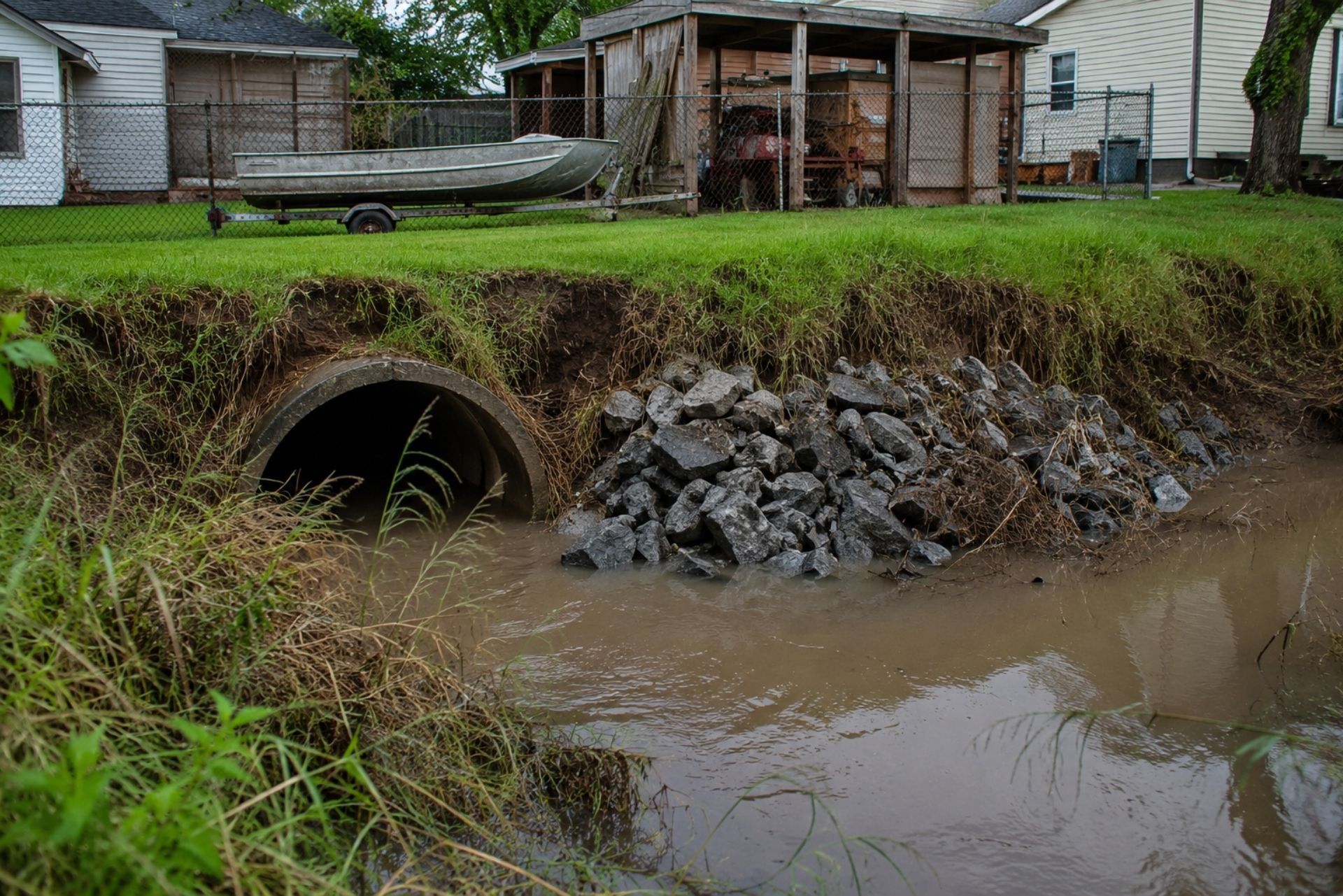
Colyell Creek runs through residential areas of Walker and represents a specific, concentrated risk for nearby properties. Homes within a few hundred feet of the creek face direct exposure to overbank flooding during heavy storms. Even moderate rainfall events can cause the creek to rise quickly, particularly when downstream drainage is already saturated.
Properties along Colyell Creek are frequently mapped in Special Flood Hazard Areas (SFHAs), which means mandatory flood insurance if you have a federally backed mortgage. But even homes just outside the mapped floodplain face real risk. You can check your property's specific flood zone designation to understand where you stand. Don't assume that being outside the SFHA means you're safe.
The Impact of Repetitive Loss on Walker Properties
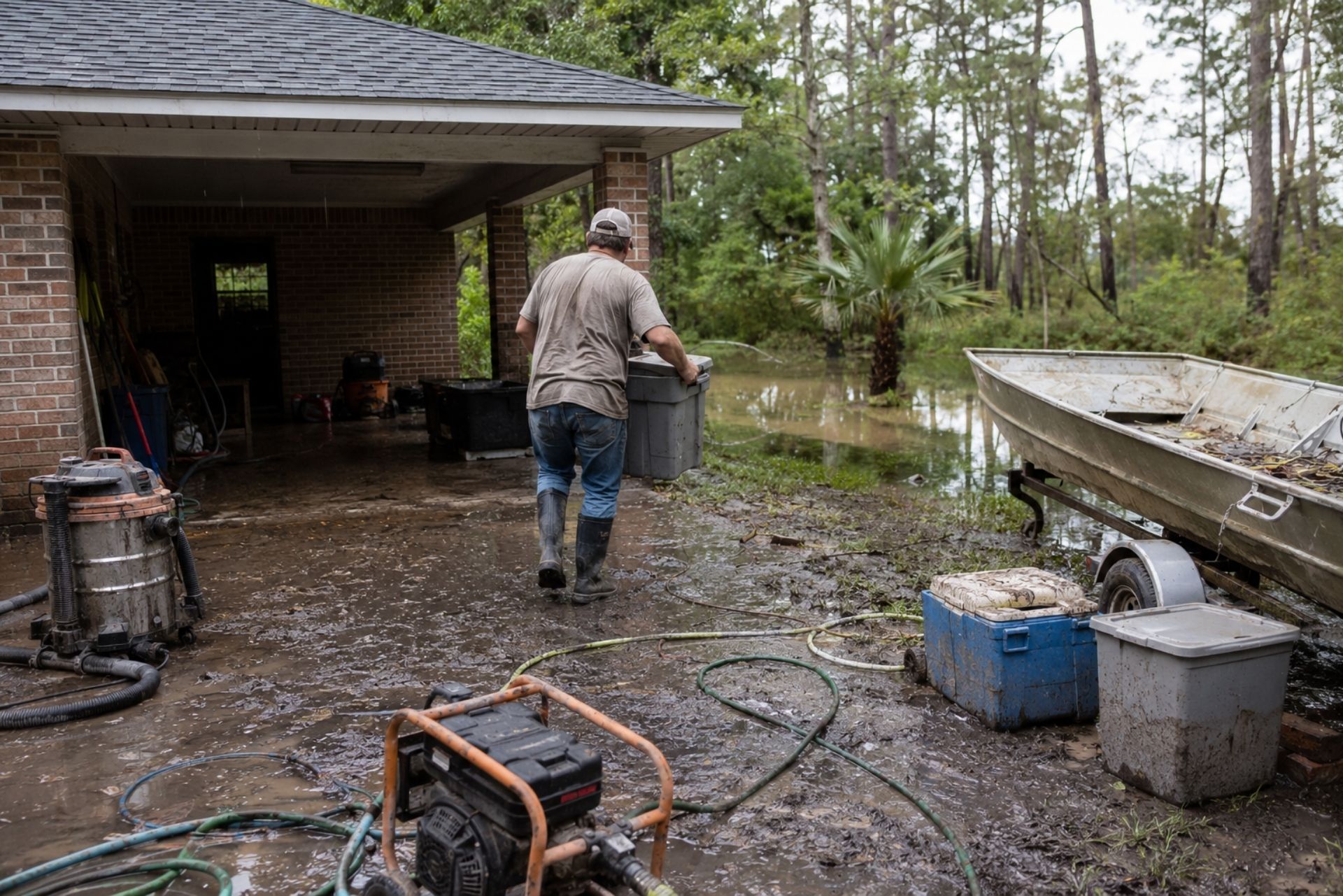
A repetitive loss property is one that has received two or more NFIP flood insurance claim payments of more than $1,000 within any 10-year period. Walker has a significant number of these properties due to the recurring nature of flooding in the area. If your home carries this designation, it changes your insurance picture substantially.
FEMA tracks repetitive loss properties closely, and they're a priority for mitigation funding. In fact, FEMA recently approved $11.72 million in Community Project Funding for Livingston Parish specifically to acquire, demolish, or elevate properties that have suffered substantial damage. If your home qualifies, you may have options ranging from elevation grants to buyout programs.
The catch is that repetitive loss status also drives up your NFIP premiums. Under FEMA's Risk Rating 2.0 methodology, your claim history is a direct factor in pricing. Homes with multiple claims can see annual premiums climb into the $3,000 to $5,000 range or higher. This is one area where working with a knowledgeable local agent, like the team at Chabert Insurance: The Ehrhardt Agency, can help you evaluate whether mitigation steps or alternative coverage options make financial sense.
Elevation Certificates and Rating Your Risk
An Elevation Certificate (EC) is a document prepared by a licensed surveyor that records your home's lowest floor elevation relative to the Base Flood Elevation (BFE) established by FEMA. This single document is one of the most influential factors in determining your flood insurance premium.
If your lowest floor sits above the BFE, you'll generally pay less. If it sits below, you'll pay more, sometimes dramatically more. The relationship between your elevation and the BFE is expressed as a number: positive means you're above, negative means below. Even a one-foot difference can shift your annual premium by hundreds of dollars.
How Elevation Affects Your NFIP Premiums
Under Risk Rating 2.0, FEMA considers multiple variables, but elevation remains central. A home with a first floor two feet above BFE in Walker might pay $800 per year, while an identical home two feet below BFE could pay $3,200 or more. The math is stark.
If you don't have an Elevation Certificate, your insurer may rate your property using less favorable assumptions. Getting one completed is often a smart investment, even if it costs several hundred dollars. Properties that were built before your community's first FIRM (known as pre-FIRM structures) especially benefit from having an EC on file, since their default ratings tend to be high.
Private vs. Federal Insurance Requirements
Both NFIP and private flood insurers may request or require an Elevation Certificate, but they use the data differently. NFIP pricing is formulaic and tied directly to FEMA's rating engine. Private insurers have more flexibility in how they weight elevation data against other factors like distance from water, soil type, and local drainage capacity.
Some private carriers will write policies without an EC if they can model the risk using LiDAR data and proprietary algorithms. That said, having an EC almost always works in your favor. It removes guesswork and gives any insurer, federal or private, a concrete data point to work with.
Comparing NFIP and Private Flood Policies
Choosing between the National Flood Insurance Program and a private flood policy isn't straightforward. Each has advantages depending on your property's risk profile, value, and coverage needs.
| Feature | NFIP | Private Flood |
|---|---|---|
| Max Building Coverage | $250,000 (residential) | Often $1M+ |
| Max Contents Coverage | $100,000 | Varies, often higher |
| Loss of Use Coverage | Not included | Often included |
| Waiting Period | 30 days | Sometimes 10-15 days |
| Pricing Flexibility | Standardized (Risk Rating 2.0) | Carrier-specific models |
| Claims Process | FEMA-managed | Carrier-managed |
| Availability | All NFIP communities | Varies by carrier/risk |
For a deeper comparison tailored to Louisiana homeowners, Chabert Insurance has published a useful breakdown of NFIP versus private flood insurance that covers the specifics worth reviewing.
Private flood policies can be particularly attractive for Walker homeowners whose properties are valued above the NFIP's $250,000 building coverage cap. They also tend to offer additional living expense coverage, which the NFIP doesn't provide. On the other hand, NFIP policies carry the backing of the federal government, and some mortgage servicers still prefer or require them.
How Walker Property Owners Can Choose the Right Flood Policy
Selecting the right flood policy starts with understanding your property's specific risk factors, not just your flood zone. Here's a practical approach:
- Get an Elevation Certificate if you don't already have one. The cost is modest compared to the premium savings it can unlock.
- Review your property's claim history. If you're classified as repetitive loss, explore mitigation funding options before simply accepting higher premiums.
- Compare at least two or three quotes. Get pricing from the NFIP and at least one private carrier. An independent agent can pull these for you simultaneously.
- Check whether your flood zone changed in the 2026 FIRM updates. A reclassification can affect both your premium and your coverage requirements.
- Don't skip contents coverage. Many Walker homeowners insure the structure but underinsure their belongings, which can be a costly mistake after a flood.
The team at Chabert Insurance: The Ehrhardt Agency works with Walker and Livingston Parish property owners regularly and can walk you through these steps with your specific property data in hand.
Common Questions About Walker Flood Coverage
FAQ: Do I need flood insurance if I'm not in a high-risk zone?
Yes. Over 20% of all NFIP claims come from properties in low-to-moderate risk areas. Walker's 2016 flood proved that being outside a mapped floodplain doesn't mean you're safe. A Preferred Risk Policy through the NFIP can cost as little as $400 to $600 per year for these properties.
FAQ: How much does an elevation certificate cost in Livingston Parish?
Typically between $500 and $1,000 depending on the surveyor and the complexity of your property. Homes with additions, crawl spaces, or unusual foundations tend to cost more. The investment usually pays for itself within one to two policy terms through lower premiums.
FAQ: Will my homeowners insurance cover water from Colyell Creek?
No. Standard homeowners policies in Louisiana exclude damage caused by rising surface water, overflowing creeks, or groundwater intrusion. Flood damage requires a separate flood policy, whether through the NFIP or a private carrier. This is one of the most common and costly misunderstandings among Walker homeowners.
Protecting Your Walker Property Investment
Flood risk in Walker isn't going away. The drainage improvements underway across Livingston Parish and the Amite River Basin will help reduce the severity of future events, but they won't eliminate the threat. Your best protection is a combination of the right insurance coverage, an up-to-date Elevation Certificate, and a clear understanding of how your property's history and location affect your options.
If you haven't reviewed your flood policy recently, or if you're relying on assumptions about your flood zone that predate the 2026 map updates, now is the time to act. Reach out to a local agent who understands the specific risks that Walker property owners face and can help you find coverage that fits both your exposure and your budget. The difference between being properly covered and being underinsured is often just one conversation.
On this page
Fully licensed
Chabert Insurance: The Ehrhardt Agency is a fully licensed independent insurance agency serving individuals, families, and businesses across Louisiana and Mississippi.
From our offices in Mandeville and New Orleans, we proudly serve clients in Mandeville, Covington, New Orleans, Kenner, Metairie, Harahan, River Ridge, and Slidell, as well as the Westbank and St. Bernard Parish, and communities throughout Louisiana and Mississippi. As an independent agency, our team works with a wide range of top-rated carriers to provide personal and commercial coverage — home, auto, flood, commercial, life, and more — built around the real needs of the people and businesses we protect.
FLOOD INSURANCE BY CITY

About the Author
Ryan J. Ehrhardt
Owner / Licensed Agent
I'm Ryan J. Ehrhardt, owner and licensed agent at Chabert Insurance: The Ehrhardt Agency. I lead our team across our Mandeville and New Orleans offices, and I work with families and business owners every day to find coverage that fits their lives. I believe insurance should be simple to understand, so I take the time to explain your options in plain language before you decide.
As an independent agent, I answer to you, not to a single carrier. That means I can shop your policy across many companies and focus on what protects you best. When you call our office, you reach a real person who knows your account. I would be glad to review your coverage and help you feel confident about it.


[CONFIRM name]
Google review · Mandeville office
Home, Auto, Flood, Commercial & Life Insurance
Insurance built around your life in Louisiana
We compare coverage across many carriers and build one program that protects everything you own.
Home Insurance
Cover the cost to rebuild your house, replace your belongings, and answer a liability claim against your household.
Auto Insurance
Protect your vehicles with liability, collision, and uninsured motorist limits that hold up after a serious Louisiana wreck.
Flood Insurance
Your homeowners policy excludes flood. We quote NFIP and private options for your building and its contents.
Commercial Insurance
Liability, property, workers' compensation, and commercial auto for Louisiana businesses, priced against how your company operates.

Life Insurance
Replace the income your family depends on, with term and permanent options priced across several carriers.

Umbrella Insurance
Add a layer of liability protection above your auto and home limits, usually for a modest premium.
Ruston
Baton Rouge
Mandeville
Gretna
Louisiana Home Insurance
Home insurance built around where you live
Home insurance is our specialty. We write homeowners policies across Louisiana and price them against the wind, hail, and flood risk in your parish.
Areas we cover
Commercial Insurance for Louisiana Businesses
Coverage that keeps your business running
We build commercial programs around how your company actually operates, then compare carriers on price and claim service.

General Liability
Covers claims of bodily injury or property damage that come from your day-to-day operations.
Commercial Property
Protects your building, equipment, and inventory against fire, storm, theft, and other covered losses.

Workers' Compensation
Pays medical care and lost wages when an employee is hurt on the job, as Louisiana requires.

Commercial Auto
Covers the vehicles your business owns, along with the employees who drive them for work.

Professional Liability
Covers claims that your professional advice or services caused a client a financial loss.

Cyber Liability
Handles breach response, notification costs, and liability after customer data is exposed.
[CONFIRM name]
Google review · Mandeville office
Business Insurance by Industry
Specialized coverage for your line of work
Every trade carries its own risks. We know the coverage these Louisiana businesses need and where the gaps usually sit.
Plumbers
Liability, tools, and commercial auto coverage built for water damage claims and job-site risk.
Restaurants
Property, liquor liability, and spoilage coverage for kitchens, dining rooms, and your staff.
Real Estate Investors
Landlord property, liability, and vacancy coverage for rentals, flips, and multi-unit buildings.
[CONFIRM name]
Google review · Mandeville office
How to Get Insured in 4 Steps
Getting covered is simple
You talk to a licensed agent from the first call to the annual review.

1
Tell us about you
Share what you want to protect. A licensed agent asks about your home, vehicles, family, or business and gathers the details carriers need.
2
We shop our carriers
We compare options across the markets we represent and look at price, coverage limits, and how each carrier handles claims.
3
Review your choices
We explain coverage and price in plain language, side by side, so you can see the trade-offs before you choose.
4
Get covered
Your policy starts, you get your documents, and we review the coverage with you each year.
5-Star Rated by Louisiana Clients
What our clients say
Louisiana families and business owners rate us 5 stars for clear advice and fast answers.
139+ five-star reviews across our Mandeville and New Orleans offices
[CONFIRM name]
Google review · Mandeville office
Louisiana Insurance Questions, Answered
Questions clients ask us
Short answers to what people ask before they switch agencies.
What does an independent insurance agency do?
An independent agency represents many carriers instead of one. We gather your information once, compare policies across those companies, and recommend the option that fits your coverage needs and budget. You keep the same agent as your policies change.
Which types of insurance does Chabert offer?
We write home, auto, flood, life, umbrella, and boat policies for individuals, plus general liability, property, workers' compensation, commercial auto, business interruption, and cyber coverage for businesses. One team handles both sides of your account.
Do you serve both Louisiana and Mississippi?
Yes. Our agents are licensed in Louisiana and Mississippi [CONFIRM license numbers]. We work from offices in Mandeville and New Orleans and serve clients across both states by phone, email, and in person.
How do you find me a competitive rate?
We send your details to the carriers we represent and compare what comes back. We look at premium, coverage limits, deductibles, and available discounts such as bundling auto with home, then show you the options together.
Can I manage my policy online?
Yes. Our Client Portal, powered by GloveBox, holds your policy documents, ID cards, and billing links in one place. You can also request a policy change or certificate from our Client Center page.
How do I start a quote or file a claim?
Call 504-326-6526 or fill out the quote form on this page and an agent will follow up. To report a claim, use the Report a Claim page or call the office and we will start the process with your carrier.
[REVIEW_WIDGET] — connect a review aggregator (Elfsight, EmbedSocial, Trustindex, or Duda Reviews) to pull both Google Business Profiles and Facebook into one rotating feed. The cards below stand in until it is live.

Louisiana Insurance Tips & News
Insurance tips and local news
Practical guidance from our agents on coverage, claims, and living with Louisiana weather.
[CONFIRM name]
Google review · Mandeville office
Serving Louisiana & Mississippi
Licensed across Louisiana and Mississippi
Visit either office or handle everything by phone and email. Same team, same records, both states.
Louisiana
Offices in Mandeville and New Orleans, serving the North Shore, greater New Orleans, and beyond.
Mississippi
Licensed for personal and commercial policies across the state.
Mandeville Office
240 Dalwill Dr, Suite B, Mandeville, LA 70471
Office hours: Monday – Friday, 8:00 a.m. – 5:00 p.m.
New Orleans Office
824 Elmwood Park Blvd, Suite 145, New Orleans, LA 70123
Office hours: Monday – Friday, 8:00 a.m. – 5:00 p.m.