
Variant Insurance Group is a licensed independent insurance agency in Minnesota. [CONFIRM license #.]
Get a Quote
Variant Insurance Group is a licensed independent insurance agency serving Minnesota families and businesses.
From our office in Maple Plain, our team works with many of Minnesota's top-rated carriers so your home, auto, life, and business coverage fits your real needs. We serve families and businesses across Minnesota.
A single miswired junction box can spark a fire that destroys a client's home, and the claim that follows can destroy your business just as fast. Electrical contractors face a unique combination of risks that most trades don't share: fire liability, faulty workmanship allegations, expensive tools walking off job sites, and employees working around live circuits every day. The right insurance program doesn't just check a box for your general contractor or licensing board. It protects the livelihood you've spent years building.
Whether you're a one-person shop pulling residential permits in Mandeville or running a commercial crew across the Greater New Orleans area, understanding what your policies actually cover (and where the gaps hide) is the difference between surviving a bad claim and closing your doors. This guide breaks down the core coverage types every electrician needs, from general liability and completed operations to commercial auto and workers' compensation, so you can build a policy package that fits your real-world exposure.
Core Liability Protections for Electrical Contractors
Liability coverage forms the foundation of any electrical contractor's insurance program. These policies respond when someone else suffers injury or property damage because of your work, your presence on a job site, or a defect that shows up months after you've packed up your tools. Getting the structure right matters more for electricians than for most trades because of the severity of potential claims. A plumber's leak might damage drywall; your wiring error can burn down a building.
General Liability and Third-Party Risks
Your commercial general liability (CGL) policy covers bodily injury and property damage claims from third parties. If a homeowner trips over your tool bag and breaks a wrist, or your apprentice accidentally damages a client's hardwood floor while running conduit, your CGL responds. Most Louisiana general contractors won't let you on a job site without proof of at least $1 million per occurrence and $2 million aggregate.
But here's where electricians get tripped up: standard CGL policies often exclude damage caused by your actual work product. If you install a panel and it fails, the CGL might cover the resulting property damage to the home but won't pay to redo your work. That distinction catches a lot of contractors off guard the first time they file a claim. Typical annual premiums for electricians range from roughly $700 to $2,500 depending on revenue, payroll, and claims history.
Understanding Fire Exposure and Faulty Workmanship Claims
Fire risk is the elephant in every electrician's insurance conversation. Home electrical fires account for a significant share of residential fire losses each year, and the National Fire Protection Association tracks electrical distribution equipment as a leading cause of home fires nationally. When a fire traces back to your installation, the property owner's insurer will come after you through subrogation, and those claims regularly exceed six figures.
Faulty workmanship coverage fills a critical gap that standard CGL policies leave open. Your general liability might pay for the fire damage to a client's kitchen, but it won't cover the cost to tear out and replace the defective wiring that caused it. A dedicated faulty workmanship endorsement picks up that rip-and-replace cost. In Louisiana's humid climate, where moisture accelerates corrosion on connections and terminals, workmanship failures can surface faster than contractors expect. If you're working in older New Orleans homes with outdated wiring, your exposure multiplies.
Completed Operations: Protection After the Job is Done
Your CGL policy has two key parts: premises/operations coverage (active job sites) and completed operations coverage (after you've finished and left). Completed operations is where most electrician claims actually land. A circuit you installed six months ago overheats and starts a fire. A panel you wired develops an arc fault a year later. These claims hit your completed operations coverage.
Many contractors unknowingly let this coverage lapse or carry limits that are too low. Some policies allow completed operations to be excluded entirely to reduce premiums, which is a dangerous trade-off for any electrical contractor. Louisiana requires you to maintain completed operations coverage for the statute of limitations period on construction defect claims, which can extend several years. Every electrician needs to understand how business insurance addresses this post-completion exposure. If you're doing commercial work with long-tail risk, make sure your limits match the project size.

Protecting Your Physical Assets and Mobility
Your liability policies protect you from what you owe others. But what about the tools, equipment, and vehicles that keep your business running day to day? Losing a van full of diagnostic equipment or having specialized tools stolen from a job site creates immediate operational disruption on top of the financial hit.
Tools and Equipment: Inland Marine Coverage
Standard commercial property policies cover items at your shop or office. They don't do much for the $15,000 worth of meters, benders, fish tapes, and power tools sitting in your van or staged at a construction site. That's where inland marine coverage steps in. It protects tools and equipment in transit, at job sites, and in temporary storage.
Construction site theft is a persistent and costly problem across the industry, and electrical tools are prime targets because they're portable and easy to resell. An inland marine policy typically covers theft, vandalism, and accidental damage. You'll want to keep an updated inventory with serial numbers and photos. Some policies offer blanket coverage up to a set limit, while others require a scheduled list of high-value items. For Louisiana contractors working across multiple parishes, blanket coverage usually makes more sense because your equipment moves constantly.
Commercial Auto for Service Vans and Trucks
Your personal auto policy won't cover an accident that happens while you're driving to a job site in a vehicle used for business. Commercial auto insurance covers your work vehicles for liability, collision, and comprehensive losses. If your van is loaded with tools and gets totaled, a good commercial auto policy covers the vehicle itself, while your inland marine policy covers the contents.
One thing to keep in mind: commercial auto insurance rates have been climbing steadily. Rates rose 5.8% in Q1 2026, marking the 59th consecutive quarterly increase. For contractors running multiple vehicles, those increases add up fast. You can manage costs by maintaining clean driving records across your team, increasing deductibles on older vehicles, and bundling your commercial auto with other business policies. An agency like Chabert Insurance: The Ehrhardt Agency, with deep knowledge of the Louisiana market, can help you find carriers that still offer competitive rates for contractor fleets in the New Orleans and Mandeville area.
Workers' Compensation and Employee Safety
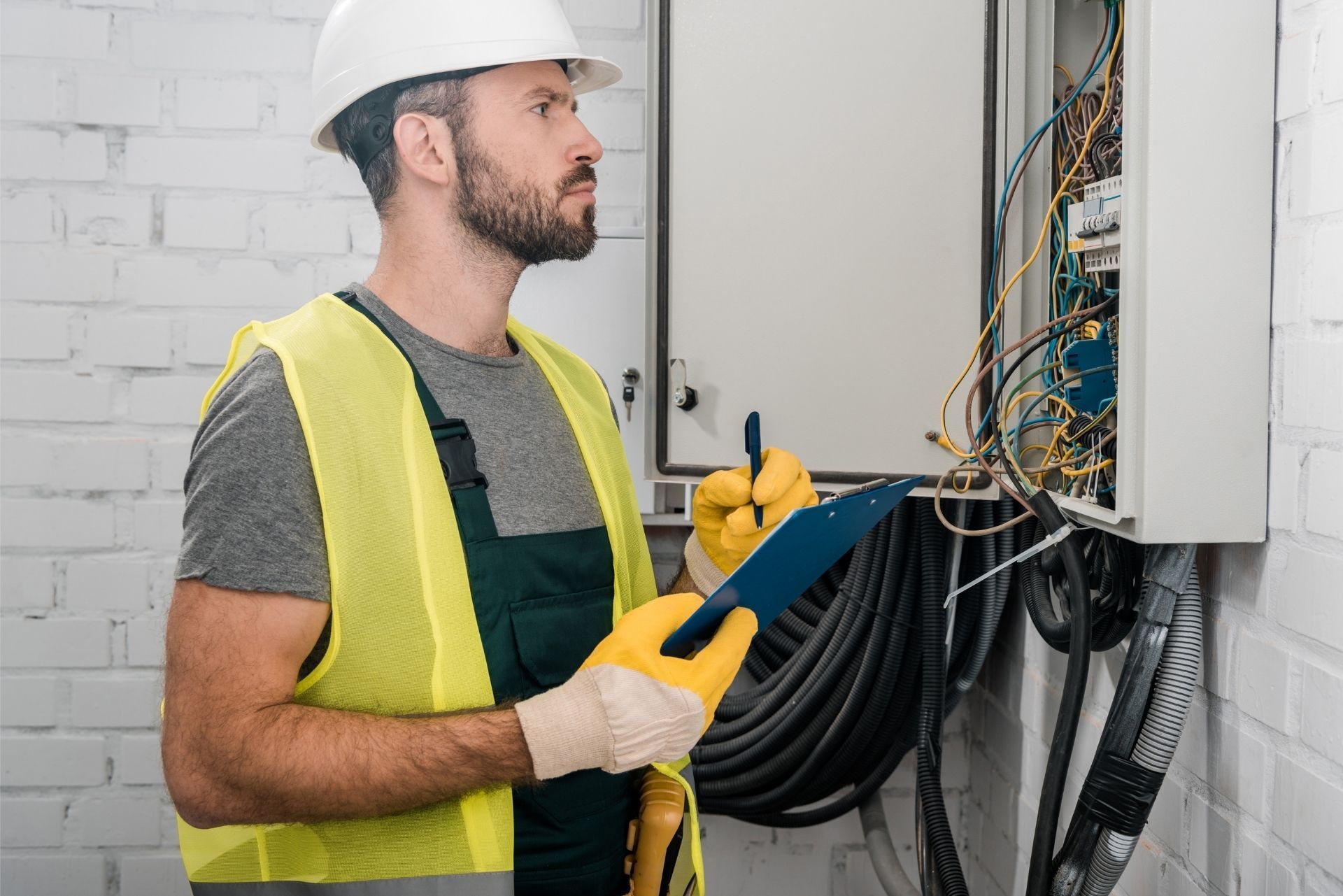
Louisiana law requires workers' compensation coverage for any business with one or more employees. Electrical work consistently ranks among the higher-risk trades, which means your comp premiums reflect that exposure. Electricians face electrocution, falls from ladders, burns, and repetitive strain injuries. A single serious injury claim without coverage can generate medical bills and lost-wage obligations that would bankrupt most small contractors.
Workers' comp rates are classified by job code, and electrical contractors typically fall under NCCI class code 5190. Your experience modification rate (EMR) plays a huge role in what you actually pay. An EMR above 1.0 means you've had more claims than average, and it can increase your premiums by 20% or more. Conversely, a strong safety record drives your EMR below 1.0 and saves you real money. Florida-based electricians have seen workers' comp costs fluctuate significantly based on market conditions, and Louisiana follows similar patterns.
Investing in safety training, proper PPE, and documented safety protocols does more than protect your crew. It directly reduces your insurance costs over time. If you're a sole proprietor with no employees, you can often exempt yourself from the requirement, but carrying a policy anyway protects you if you're injured on the job and can't work.
Comparing Essential vs. Enhanced Coverage
Not every electrician needs the same policy structure. A residential service electrician with one van and no employees has very different needs than a commercial contractor with a 12-person crew and a fleet of trucks. The table below breaks down what a basic setup looks like compared to a more comprehensive package.
Comparison Table: Basic General Liability vs. Comprehensive Packages
| Coverage Element | Basic Package | Comprehensive Package |
|---|---|---|
| General Liability | $1M/$2M occurrence/aggregate | $2M/$4M with umbrella option |
| Completed Operations | Included at base limits | Higher limits, extended reporting |
| Faulty Workmanship | Often excluded | Endorsement included |
| Inland Marine (Tools) | Not included | $25K-$100K+ blanket coverage |
| Commercial Auto | Liability only | Full coverage with hired/non-owned |
| Workers' Comp | State minimum | Enhanced with employer's liability |
| Professional Liability | Not included | Covers design/specification errors |
| Cyber Liability | Not included | Protects customer data |
The basic package meets minimum requirements for licensing and simple subcontract work. The comprehensive package reflects what most established electrical contractors actually need, especially those bidding on commercial projects or working with general contractors who require higher limits. The 2026 construction insurance market outlook suggests that carriers are tightening underwriting standards for trades with fire exposure, making it harder to secure coverage if you wait until you have claims on your record.
Common Questions About Electrician Insurance
How much does insurance cost for an electrical contractor in Louisiana? Costs vary widely based on revenue, payroll, and claims history. A solo residential electrician might pay $2,500 to $5,000 annually for a basic package, while a commercial contractor with employees could pay $15,000 or more.
Do I need insurance if I'm a sole proprietor with no employees? Louisiana requires general liability for licensing, and most clients or GCs require proof of coverage before you step on site. Workers' comp may be optional for sole proprietors, but it's still smart to carry.
What's the difference between general liability and professional liability? General liability covers bodily injury and property damage. Professional liability covers errors in your design, planning, or specifications. If you do any design-build work, you likely need both.
Does my general liability policy cover fire damage from my work? It typically covers the resulting damage to the client's property, but not the cost to fix your defective work. You need a faulty workmanship endorsement for that.
Can I bundle all my coverage into one policy? Yes. A Business Owner's Policy (BOP) bundles general liability with commercial property coverage. You'll add commercial auto, workers' comp, and inland marine as separate policies or endorsements. Working with a local agency simplifies this process.
Will my rates go up after a claim? Usually, yes. One claim may not spike your rates dramatically, but multiple claims within a few years will significantly increase your premiums and your EMR for workers' comp.
Before You Buy a Policy
Getting your insurance right isn't about buying the cheapest policy you can find. It's about matching your coverage to your actual risk profile. An electrician doing panel upgrades in 100-year-old Uptown homes faces different exposures than one pulling wire in new construction out in Slidell. Your policy should reflect that reality.
Start by documenting your revenue, payroll, vehicle inventory, and tool values. Know your subcontractor requirements and any contract insurance minimums you need to meet. Then talk to an agency that understands the electrical trade and the Louisiana market. Chabert Insurance: The Ehrhardt Agency works with electricians across New Orleans and Mandeville to build coverage programs that address fire exposure, completed operations risk, and everything in between, so you can focus on your work instead of worrying about what happens if something goes wrong.
The best time to review your coverage is before renewal season, not after a claim. Pull out your current policies, compare them against the table above, and identify the gaps. Your business is worth protecting properly.
On this page
Fully licensed
Chabert Insurance: The Ehrhardt Agency is a fully licensed independent insurance agency serving individuals, families, and businesses across Louisiana and Mississippi.
From our offices in Mandeville and New Orleans, we proudly serve clients in Mandeville, Covington, New Orleans, Kenner, Metairie, Harahan, River Ridge, and Slidell, as well as the Westbank and St. Bernard Parish, and communities throughout Louisiana and Mississippi. As an independent agency, our team works with a wide range of top-rated carriers to provide personal and commercial coverage — home, auto, flood, commercial, life, and more — built around the real needs of the people and businesses we protect.
OTHER INSURANCE COVERAGE

About the Author
Ryan J. Ehrhardt
Owner / Licensed Agent
I'm Ryan J. Ehrhardt, owner and licensed agent at Chabert Insurance: The Ehrhardt Agency. I lead our team across our Mandeville and New Orleans offices, and I work with families and business owners every day to find coverage that fits their lives. I believe insurance should be simple to understand, so I take the time to explain your options in plain language before you decide.
As an independent agent, I answer to you, not to a single carrier. That means I can shop your policy across many companies and focus on what protects you best. When you call our office, you reach a real person who knows your account. I would be glad to review your coverage and help you feel confident about it.

[CONFIRM name]
Google review · Mandeville office
Home, Auto, Flood, Commercial & Life Insurance
Insurance built around your life in Louisiana
We compare coverage across many carriers and build one program that protects everything you own.

Home Insurance
Cover the cost to rebuild your house, replace your belongings, and answer a liability claim against your household.
Auto Insurance
Protect your vehicles with liability, collision, and uninsured motorist limits that hold up after a serious Louisiana wreck.
Flood Insurance
Your homeowners policy excludes flood. We quote NFIP and private options for your building and its contents.

Commercial Insurance
Liability, property, workers' compensation, and commercial auto for Louisiana businesses, priced against how your company operates.

Life Insurance
Replace the income your family depends on, with term and permanent options priced across several carriers.

Umbrella Insurance
Add a layer of liability protection above your auto and home limits, usually for a modest premium.
Ruston
Baton Rouge
Mandeville
Gretna
Louisiana Home Insurance
Home insurance built around where you live
Home insurance is our specialty. We write homeowners policies across Louisiana and price them against the wind, hail, and flood risk in your parish.
Areas we cover
[CONFIRM name]
Google review · Mandeville office
Business Insurance by Industry
Specialized coverage for your line of work
Every trade carries its own risks. We know the coverage these Louisiana businesses need and where the gaps usually sit.
Plumbers
Liability, tools, and commercial auto coverage built for water damage claims and job-site risk.
Restaurants
Property, liquor liability, and spoilage coverage for kitchens, dining rooms, and your staff.
Real Estate Investors
Landlord property, liability, and vacancy coverage for rentals, flips, and multi-unit buildings.
[CONFIRM name]
Google review · Mandeville office
How to Get Insured in 4 Steps
Getting covered is simple
You talk to a licensed agent from the first call to the annual review.

1
Tell us about you
Share what you want to protect. A licensed agent asks about your home, vehicles, family, or business and gathers the details carriers need.
2
We shop our carriers
We compare options across the markets we represent and look at price, coverage limits, and how each carrier handles claims.
3
Review your choices
We explain coverage and price in plain language, side by side, so you can see the trade-offs before you choose.
4
Get covered
Your policy starts, you get your documents, and we review the coverage with you each year.
5-Star Rated by Louisiana Clients
What our clients say
Louisiana families and business owners rate us 5 stars for clear advice and fast answers.
139+ five-star reviews across our Mandeville and New Orleans offices