
Variant Insurance Group is a licensed independent insurance agency in Minnesota. [CONFIRM license #.]
Get a Quote
Variant Insurance Group is a licensed independent insurance agency serving Minnesota families and businesses.
From our office in Maple Plain, our team works with many of Minnesota's top-rated carriers so your home, auto, life, and business coverage fits your real needs. We serve families and businesses across Minnesota.
A single miscalculated swing of a wrecking ball can send debris into a neighboring storefront, rupture a buried gas line, or release a cloud of asbestos dust over a city block. For demolition contractors working in dense urban corridors like New Orleans, those aren't hypothetical scenarios: they're Tuesday. The insurance needs of a wrecking contractor look nothing like those of a general builder, and a standard commercial policy will leave you dangerously exposed the moment something goes wrong.
Demolition contractor insurance has to account for risks that most trades never face: structural collapse during teardown, underground utility strikes, toxic material releases, and damage to buildings you never touched. Getting the right mix of general liability, pollution coverage, equipment protection, and adjacent property endorsements isn't optional. It's the difference between surviving a catastrophic claim and closing your doors. Construction insurance premiums have climbed roughly 15% in 2026, and demolition contractors are feeling that squeeze harder than most. Understanding exactly what you need, and what you can skip, saves real money while keeping your business protected.
Core Coverage: General Liability and the XCU Hazard
Every demolition contractor needs a commercial general liability (CGL) policy as a starting point. CGL covers third-party bodily injury, property damage, and personal injury claims that arise from your operations. But here's the catch: a standard CGL policy often excludes the very hazards that define demolition work.
Most insurers classify demolition as a high-hazard trade, and your premiums reflect that classification. Rates are influenced by your annual revenue, payroll, claims history, and the types of structures you tear down. A contractor demolishing single-story wood-frame houses pays far less than one bringing down multi-story concrete parking garages in the French Quarter. Your CGL policy is the foundation, but without the right endorsements, it's a foundation with cracks.
Understanding Explosion, Collapse, and Underground (XCU) Exclusions
XCU stands for explosion, collapse, and underground hazard, and these three exclusions appear in many standard CGL policies. If your policy carries XCU exclusions, you have no coverage for damage caused by blasting, structural collapse during demolition, or striking underground utilities. For a wrecking contractor, that's like buying a car with no engine.
You need XCU coverage added back into your policy, or you need a specialty policy that includes it from the start. Maintaining structural integrity during controlled demolition requires careful engineering, but even the best-planned teardown can trigger an unexpected collapse. When a retaining wall gives way or a floor pancakes prematurely, the resulting claims can easily reach seven figures. Make sure your agent confirms in writing that XCU exclusions have been removed.
Managing Risks to Adjacent Properties and Structures
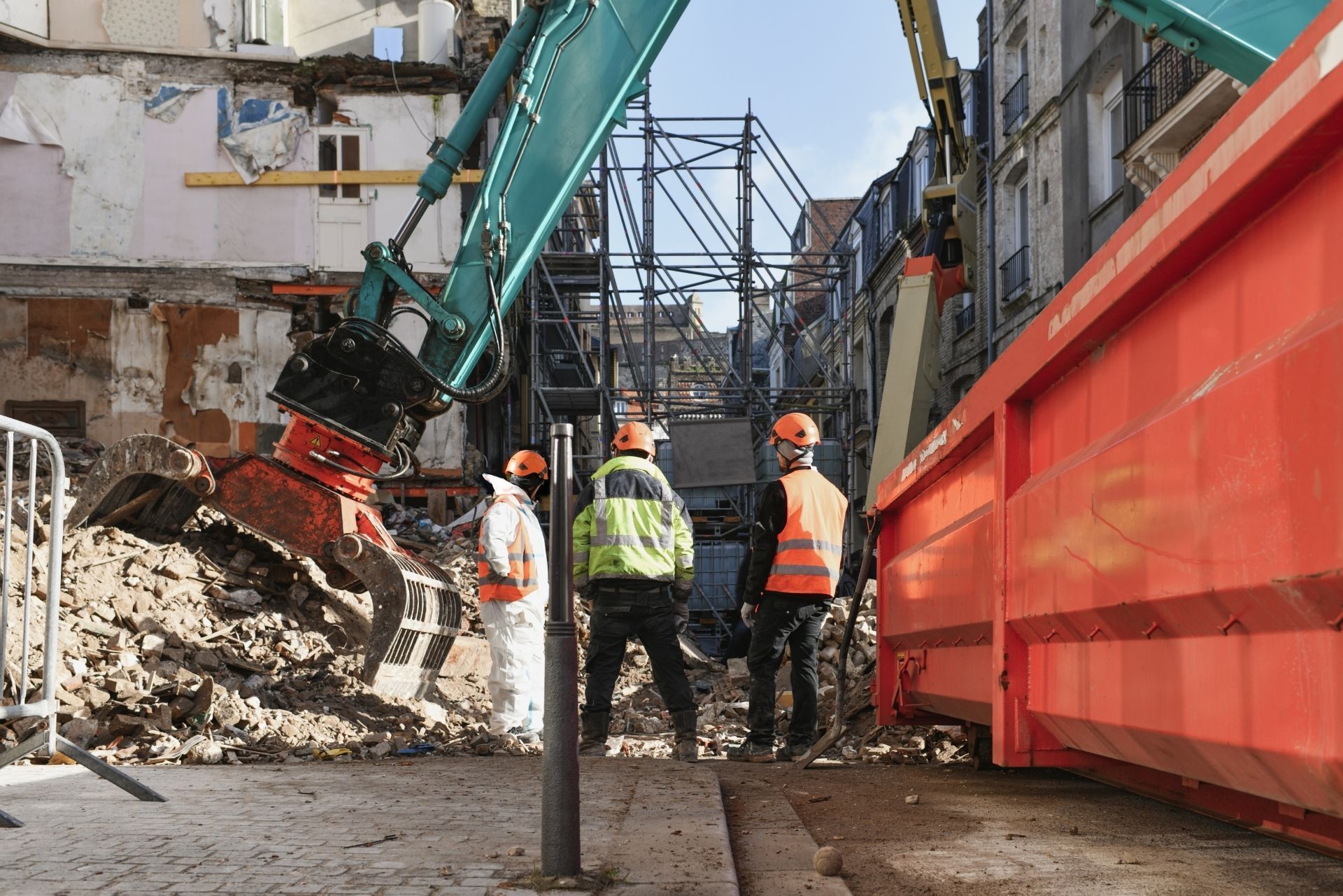
Demolition rarely happens in isolation. Your project site is usually surrounded by occupied buildings, parked vehicles, active roadways, and underground infrastructure. Vibration from heavy equipment can crack foundations next door. Falling debris can damage roofs, windows, or signage on neighboring properties.
Adjacent property damage claims are among the most common and most expensive losses demolition contractors face. In a city like New Orleans, where historic buildings sit inches apart in neighborhoods like the Warehouse District and Marigny, the risk multiplies. Your CGL policy should specifically cover damage to property you don't own and aren't working on. Some policies limit this coverage or impose sublimits that won't come close to covering a real loss. Review those sublimits carefully with your agent before you start swinging.
Environmental Risks and Pollution Liability
Standard CGL policies almost universally exclude pollution-related claims. That's a massive gap for demolition contractors, who routinely encounter hazardous materials embedded in the structures they're tearing apart. A separate pollution liability policy fills this gap and protects you from cleanup costs, regulatory fines, and third-party injury claims tied to contamination.
Asbestos, Lead, and Hazardous Material Handling
Pre-1980 buildings in Louisiana frequently contain asbestos insulation, lead paint, and other regulated materials. Disturbing these materials during demolition can trigger EPA enforcement actions, OSHA citations, and personal injury lawsuits from workers or nearby residents. Even if you hire a licensed abatement subcontractor, you can still be named in a claim.
Your pollution liability policy should explicitly cover asbestos and lead exposure events. It should also cover the cost of emergency response, soil and water remediation, and legal defense. Forever chemicals like PFAS are becoming essentially uninsurable through standard markets, so if your demolition work involves industrial sites where PFAS contamination is possible, you'll need to discuss specialty coverage options. Don't assume your pollution policy covers everything: read the exclusions list.
Sudden vs. Gradual Pollution Events
Pollution liability policies typically distinguish between sudden events and gradual contamination. A sudden event might be a ruptured fuel tank on a piece of equipment that spills diesel across a job site. Gradual pollution could be contaminated groundwater that migrates off-site over weeks or months after you've disturbed contaminated soil.
Some policies only cover sudden and accidental releases. Others provide broader coverage for gradual conditions, but at a higher premium. If you're demolishing older commercial or industrial structures, gradual pollution coverage is worth the extra cost. A contamination plume that reaches a neighbor's property can generate cleanup bills in the hundreds of thousands. The 2026 construction insurance market has seen global reinsurance capital surpass $700 billion, which has helped soften property catastrophe rates by nearly 15%, but liability lines, including pollution, remain firm. That means you're unlikely to find bargain pricing on pollution coverage this year.
Protecting Assets with Inland Marine and Equipment Coverage
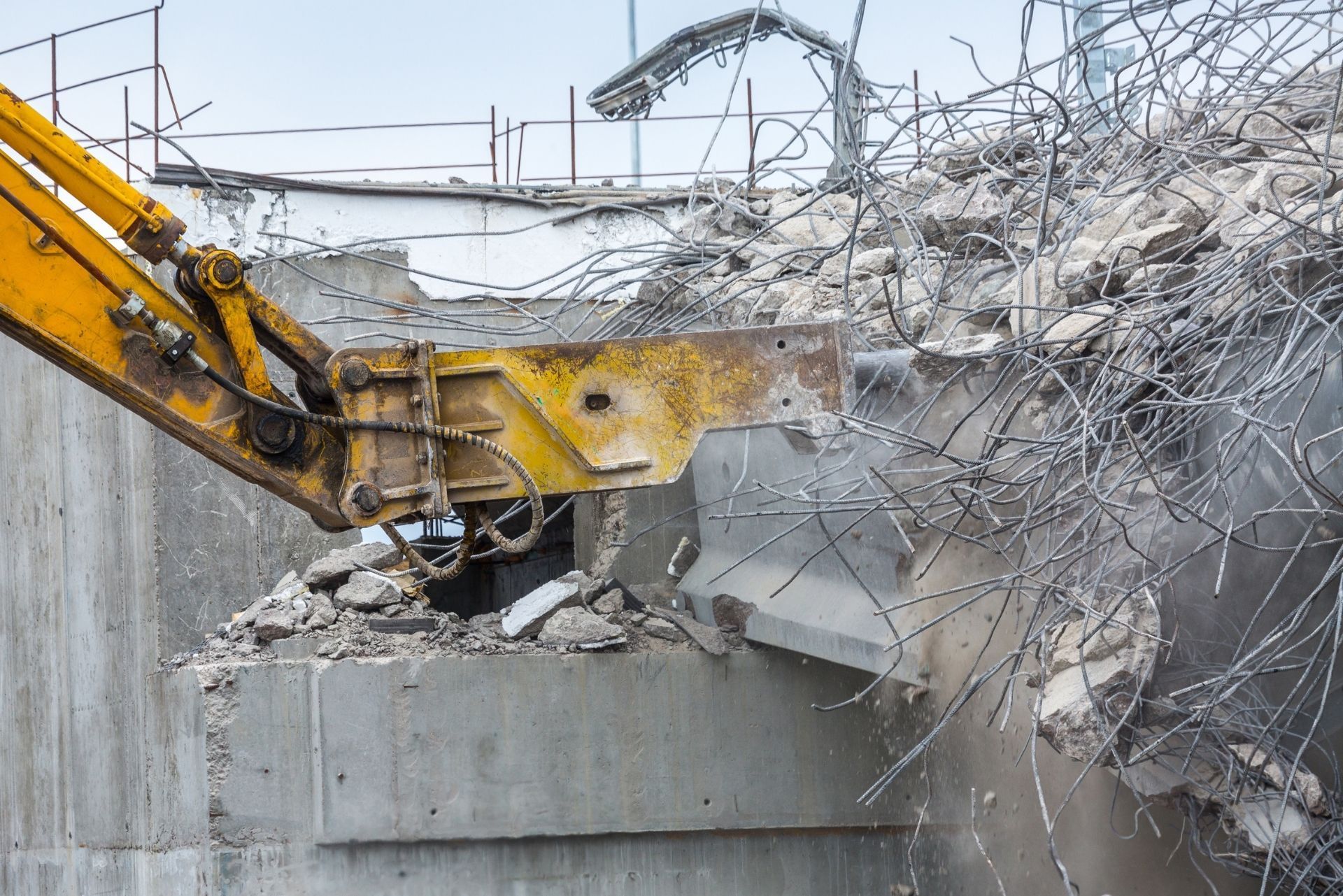
Your demolition equipment represents a massive capital investment. Excavators, skid steers, hydraulic breakers, grapples, and shears can easily total over a million dollars for a mid-size operation. Standard commercial property insurance doesn't adequately cover mobile equipment that moves between job sites.
Inland marine insurance, often called contractors' equipment coverage, protects your owned machinery against theft, vandalism, fire, collision, and other covered perils. This coverage follows your equipment wherever it goes: on the job site, in transit, or in your yard. Heavy equipment insurance costs vary widely based on the value and type of machinery, but skipping it is a gamble no serious contractor should take.
Heavy Machinery and Specialized Attachment Protection
A standard inland marine policy covers the base machine, but specialized attachments like concrete crushers, demolition shears, and pulverizers need to be scheduled separately. These attachments can cost $20,000 to $100,000 each, and they're often overlooked when setting up coverage.
Make sure every attachment is listed on your policy with its correct replacement value. Underinsuring equipment means you'll receive a depreciated payout that won't cover the cost of a new attachment. A comprehensive equipment coverage guide from industry sources confirms that listing attachments individually prevents disputes at claim time. Update your schedule whenever you buy, sell, or lease new equipment.
Rented Equipment and Subcontractor Liability
Many demolition contractors rent specialized equipment for specific jobs rather than owning every piece outright. Rental companies require you to carry insurance on their machines, and the damage waiver they offer at the counter is usually overpriced and limited in scope.
Your inland marine policy can often be endorsed to cover rented equipment, which is almost always cheaper than the rental company's waiver. You should also require certificates of insurance from every subcontractor working on your site. If a sub's employee is injured or a sub damages adjacent property, you could be pulled into the claim. An agency with deep knowledge of the Louisiana market, like Chabert Insurance: The Ehrhardt Agency in New Orleans and Mandeville, can help you structure certificates and additional insured requirements that actually hold up when claims arise.
Comparing Standard vs. Specialized Demolition Policies
Not all policies are built for the risks demolition contractors face. A standard general liability policy designed for a painting contractor or an electrician won't include the endorsements you need. Specialty demolition policies bundle the critical coverages together and are underwritten by carriers who understand wrecking operations.
Coverage Comparison Table: Standard GL vs. Demolition-Specific Policies
| Coverage Area | Standard GL Policy | Demolition-Specific Policy |
|---|---|---|
| XCU Hazards | Typically excluded | Included |
| Adjacent Property Damage | Limited sublimits | Higher limits available |
| Pollution Liability | Excluded | Available as add-on or bundled |
| Completed Operations | Basic coverage | Extended for structural risks |
| Inland Marine/Equipment | Separate policy required | Often bundled |
| Debris Removal Costs | Minimal or excluded | Included with higher limits |
| Professional Liability | Not included | Available for design-build demo |
The 2026 construction insurance market outlook shows that specialty markets for high-hazard trades are stabilizing after several years of tightening. That's good news for demolition contractors shopping for coverage. Working with an agent who places demolition risks regularly gives you access to these specialty markets rather than being stuck with a standard carrier that doesn't want your business.
Common Questions About Demolition Insurance
FAQ: What Wrecking Contractors Need to Know
Do I need a separate pollution policy, or is it included in my GL? Pollution is almost always excluded from standard GL policies. You'll need a standalone contractor's pollution liability policy or a pollution endorsement on a specialty demolition policy.
What does XCU coverage actually protect me from? XCU coverage pays for claims arising from explosions (like gas line ruptures), structural collapse during your work, and damage to underground utilities such as water mains, sewer lines, and fiber optic cables.
How much does demolition contractor insurance cost? Premiums vary dramatically based on your revenue, crew size, types of structures demolished, claims history, and location. A small residential demo crew might pay $5,000 to $15,000 annually, while a large commercial operation could pay $50,000 or more.
Are my subcontractors covered under my policy? Generally, no. Your subs need their own insurance, and you should require certificates of insurance with your company listed as an additional insured before they set foot on your site.
Does my policy cover damage to buildings next to the demolition site? It depends on your policy. Standard GL may have low sublimits for adjacent property damage. A specialty demolition policy typically offers higher limits and broader terms for this common exposure.
Is workers' compensation required for demolition contractors in Louisiana? Yes. Louisiana requires workers' compensation for any employer with one or more employees. Given the injury rates in demolition, this is one coverage you absolutely cannot skip.
Securing Your Business Against High-Impact Risks
Demolition work carries risks that most insurance policies weren't designed to handle. From XCU exposures and pollution events to equipment losses and damage to neighboring buildings, a wrecking contractor's insurance program needs to be built with precision. Gaps in coverage don't just cost money: they can end your business after a single bad claim.
The right approach starts with an honest assessment of your operations. What types of structures do you demolish? What hazardous materials might you encounter? How close are neighboring properties? Those answers shape the coverage you need. A local agency like Chabert Insurance: The Ehrhardt Agency understands the specific challenges demolition contractors face across the New Orleans and Mandeville markets, from historic district restrictions to hurricane-damaged structures that present unique teardown hazards.
Don't wait for a claim to find out your policy has gaps. Review your coverage now, ask hard questions about exclusions and sublimits, and make sure your insurance program matches the real risks on your job sites.
On this page
Fully licensed
Chabert Insurance: The Ehrhardt Agency is a fully licensed independent insurance agency serving individuals, families, and businesses across Louisiana and Mississippi.
From our offices in Mandeville and New Orleans, we proudly serve clients in Mandeville, Covington, New Orleans, Kenner, Metairie, Harahan, River Ridge, and Slidell, as well as the Westbank and St. Bernard Parish, and communities throughout Louisiana and Mississippi. As an independent agency, our team works with a wide range of top-rated carriers to provide personal and commercial coverage — home, auto, flood, commercial, life, and more — built around the real needs of the people and businesses we protect.
OTHER INSURANCE COVERAGE

About the Author
Ryan J. Ehrhardt
Owner / Licensed Agent
I'm Ryan J. Ehrhardt, owner and licensed agent at Chabert Insurance: The Ehrhardt Agency. I lead our team across our Mandeville and New Orleans offices, and I work with families and business owners every day to find coverage that fits their lives. I believe insurance should be simple to understand, so I take the time to explain your options in plain language before you decide.
As an independent agent, I answer to you, not to a single carrier. That means I can shop your policy across many companies and focus on what protects you best. When you call our office, you reach a real person who knows your account. I would be glad to review your coverage and help you feel confident about it.

[CONFIRM name]
Google review · Mandeville office
Home, Auto, Flood, Commercial & Life Insurance
Insurance built around your life in Louisiana
We compare coverage across many carriers and build one program that protects everything you own.
Home Insurance
Cover the cost to rebuild your house, replace your belongings, and answer a liability claim against your household.
Auto Insurance
Protect your vehicles with liability, collision, and uninsured motorist limits that hold up after a serious Louisiana wreck.
Flood Insurance
Your homeowners policy excludes flood. We quote NFIP and private options for your building and its contents.

Commercial Insurance
Liability, property, workers' compensation, and commercial auto for Louisiana businesses, priced against how your company operates.

Life Insurance
Replace the income your family depends on, with term and permanent options priced across several carriers.

Umbrella Insurance
Add a layer of liability protection above your auto and home limits, usually for a modest premium.
Ruston
Baton Rouge
Mandeville
Gretna
Louisiana Home Insurance
Home insurance built around where you live
Home insurance is our specialty. We write homeowners policies across Louisiana and price them against the wind, hail, and flood risk in your parish.
Areas we cover
[CONFIRM name]
Google review · Mandeville office
Business Insurance by Industry
Specialized coverage for your line of work
Every trade carries its own risks. We know the coverage these Louisiana businesses need and where the gaps usually sit.
Plumbers
Liability, tools, and commercial auto coverage built for water damage claims and job-site risk.
Restaurants
Property, liquor liability, and spoilage coverage for kitchens, dining rooms, and your staff.
Real Estate Investors
Landlord property, liability, and vacancy coverage for rentals, flips, and multi-unit buildings.
[CONFIRM name]
Google review · Mandeville office
How to Get Insured in 4 Steps
Getting covered is simple
You talk to a licensed agent from the first call to the annual review.

1
Tell us about you
Share what you want to protect. A licensed agent asks about your home, vehicles, family, or business and gathers the details carriers need.
2
We shop our carriers
We compare options across the markets we represent and look at price, coverage limits, and how each carrier handles claims.
3
Review your choices
We explain coverage and price in plain language, side by side, so you can see the trade-offs before you choose.
4
Get covered
Your policy starts, you get your documents, and we review the coverage with you each year.
5-Star Rated by Louisiana Clients
What our clients say
Louisiana families and business owners rate us 5 stars for clear advice and fast answers.
139+ five-star reviews across our Mandeville and New Orleans offices