
Variant Insurance Group is a licensed independent insurance agency in Minnesota. [CONFIRM license #.]
Get a Quote
Variant Insurance Group is a licensed independent insurance agency serving Minnesota families and businesses.
From our office in Maple Plain, our team works with many of Minnesota's top-rated carriers so your home, auto, life, and business coverage fits your real needs. We serve families and businesses across Minnesota.
A single failed compressor in a walk-in cooler at a New Orleans restaurant can destroy $40,000 worth of seafood overnight. If your company installed or serviced that unit, the restaurant owner isn't calling to chat: they're calling their attorney. Commercial refrigeration contractors face a unique set of risks that standard contractor policies often miss entirely. From spoilage claims to service agreement disputes, the insurance needs of this trade are more specific and more consequential than most contractors realize.
Whether you're installing cold storage for a Mandeville grocery chain or maintaining blast freezers at a seafood processing plant, your coverage has to account for the financial fallout that happens when temperature-controlled environments fail. The right insurance program for refrigeration contractors covers general liability, spoilage and consequential loss exposure, completed operations, equipment protection, and the risks tied to ongoing service agreements. Getting any one of these wrong can put your entire business at risk.
For a typical small-to-mid-size refrigeration contractor with roughly five employees, a 2026 insurance program budget can run anywhere from $8,000 to $25,000 annually, depending on revenue, claims history, and how much specialized coverage you carry. That's a real investment, but it's a fraction of what a single uninsured claim could cost.
Core Insurance Needs for Commercial Refrigeration Contractors
Every refrigeration contractor needs a foundation of coverage that protects against the most common and most expensive claim scenarios. These aren't optional extras: they're the policies that keep your business solvent when something goes wrong on a job site or months after you've left.
General Liability: Protecting Against Third-Party Risks
Your general liability policy is the first line of defense against claims from property damage or bodily injury caused by your work. If a technician accidentally damages a client's electrical panel during a service call, or a customer slips on a wet floor left after an installation, GL covers the resulting claim.
Standard GL policies for refrigeration contractors should carry at least $1 million per occurrence and $2 million aggregate. In Louisiana, many commercial clients and general contractors require proof of these minimums before they'll let you on-site. One thing to keep in mind: your GL policy typically won't cover damage caused by a system you installed after you've finished the job. That's where completed operations comes in.
Completed Operations: Why Post-Installation Coverage Matters
Completed operations coverage fills a critical gap. Say you install a new condensing unit for a cold storage warehouse in March. In July, a connection you made fails, the system goes down, and $200,000 in frozen product thaws. Without completed operations coverage, your GL policy won't respond to that claim because the work was already finished.
This coverage is often included in a GL policy but can be limited or excluded depending on your insurer. You need to verify that your completed operations limits are adequate for the value of the systems you install. Refrigeration contractors who work on large commercial projects should carry completed operations limits that match their GL limits, and many Louisiana clients now require this contractually. The growing trend of
product and system failure claims during extreme weather events makes this coverage even more critical in the Gulf South.
Professional Liability vs. General Liability
These two policies cover different things, and confusing them is a common mistake. GL covers physical damage and bodily injury. Professional liability (sometimes called errors and omissions) covers financial losses caused by your professional advice or design recommendations.
If you spec the wrong tonnage for a cold room and the client's product spoils because the system can't hold temperature, that's a professional liability claim, not a GL claim. Contractors who provide system design, energy audits, or equipment recommendations need both policies. Here's a quick comparison:
| Coverage Area | General Liability | Professional Liability |
|---|---|---|
| Bodily injury | Covered | Not covered |
| Property damage | Covered | Not covered |
| Design errors | Not covered | Covered |
| Wrong equipment spec | Not covered | Covered |
| Slip-and-fall at job site | Covered | Not covered |
| System undersizing advice | Not covered | Covered |

Managing Spoilage and Consequential Loss Exposure
Spoilage risk is what makes refrigeration contracting fundamentally different from other mechanical trades. An HVAC contractor's worst-case scenario might be an uncomfortable building. Your worst-case scenario involves hundreds of thousands of dollars in destroyed inventory, lost revenue, and regulatory violations.
Understanding Spoilage Coverage Limits
Standard GL and completed operations policies often exclude or severely limit spoilage claims. You may need a separate spoilage endorsement or a specialized policy that explicitly covers the value of perishable goods damaged by your work.
Coverage limits matter enormously here. A $25,000 spoilage sublimit might sound reasonable until you're facing a claim from a pharmaceutical distributor whose temperature-sensitive inventory is worth ten times that. Work with your agent to match spoilage limits to the actual value of the products your clients store. At Chabert Insurance: The Ehrhardt Agency, we regularly help Louisiana refrigeration contractors evaluate their spoilage exposure against the types of facilities they serve, from restaurant walk-ins to industrial cold storage.
Consequential Loss: The Financial Impact of System Downtime
Spoilage is the direct loss: the ruined product. Consequential loss is everything that follows. A restaurant that loses its walk-in cooler doesn't just lose food. It loses three days of revenue while waiting for repairs. It may face health department fines. It might lose catering contracts.
Your clients may try to hold you responsible for all of these downstream costs. Consequential loss coverage, sometimes called business interruption liability, protects you against these claims. The delays that often accompany commercial property claims in 2026 can extend downtime significantly, which makes this exposure even larger than it was a few years ago. Not every policy includes this coverage, so you need to ask for it specifically and understand the limits.

Protecting Your Assets: Equipment and Tools
Your trucks carry thousands of dollars in recovery machines, vacuum pumps, manifold gauges, brazing equipment, and diagnostic tools. A standard commercial auto or property policy won't adequately cover these mobile assets.
Inland Marine Insurance for Mobile Equipment
Inland marine insurance covers tools, equipment, and materials while they're in transit or stored at a job site. For refrigeration contractors, this means your recovery units, leak detectors, and specialty hand tools are protected whether they're in your service van, at a client's facility, or in a temporary storage location.
A typical inland marine policy for a refrigeration contractor covers $15,000 to $75,000 in mobile equipment, depending on inventory. The rising costs of specialized HVAC and refrigeration equipment in 2026 make it worth auditing your tool inventory annually and updating your coverage limits. Theft from service vehicles remains one of the most frequent claims in this category, especially in urban areas like New Orleans.
Installation Floaters for High-Value Units
When you're transporting and installing a $50,000 rack system or a custom glycol chiller, an installation floater covers that equipment from the moment it leaves the supplier until the installation is complete and accepted by the client. This is separate from your inland marine policy and specifically covers materials and equipment being installed as part of a project.
Without an installation floater, you'd be personally liable for any damage to a client's equipment during transit or installation. A dropped condensing unit, a forklift accident at the job site, or water damage during a rainstorm can all result in claims that your other policies won't touch. The coverage for boiler and machinery-type equipment during the installation phase is something many contractors overlook until they face a loss.
Comparing Coverage: Basic vs. Comprehensive Protection
The difference between a bare-minimum insurance program and a comprehensive one can be the difference between surviving a major claim and closing your doors. Here's how they stack up:
| Coverage Type | Basic Program | Comprehensive Program |
|---|---|---|
| General Liability | $1M/$2M limits | $1M/$2M with umbrella |
| Completed Operations | Included, low sublimits | Full GL limits apply |
| Spoilage | Excluded or $10K sublimit | $100K-$500K+ |
| Consequential Loss | Not included | Included with stated limits |
| Professional Liability | Not included | $1M per claim |
| Inland Marine | $10K-$15K | $50K-$75K+ |
| Installation Floater | Not included | Project-specific coverage |
| Service Agreement Risk | Not addressed | Contractual liability reviewed |
A basic program might cost $8,000 to $12,000 annually, while a comprehensive program runs $15,000 to $25,000. That gap narrows quickly when you consider that a single spoilage claim can exceed $100,000. Contractors who maintain service agreements with grocery stores, hospitals, or food processing facilities should strongly consider the comprehensive approach.
Frequently Asked Questions About Refrigeration Insurance
Does my general liability policy cover spoiled food if a system I installed fails? Usually not without a specific spoilage endorsement. Standard GL policies often exclude or severely limit coverage for damage to perishable goods. Ask your agent to add this coverage explicitly.
Do I need professional liability if I only install equipment and don't design systems? If you ever recommend specific equipment, suggest system configurations, or advise clients on capacity needs, you're providing professional services. A professional liability policy protects you if that advice turns out to be wrong.
What's the difference between an installation floater and inland marine? Inland marine covers your own tools and equipment. An installation floater covers materials and equipment you're installing for a client during the project. You likely need both.
Are my service agreements creating insurance gaps? They can. If your service agreement includes uptime guarantees or response time commitments, you may be contractually liable for losses that your standard policies don't cover. Have your agent review your service contracts alongside your policies.
Does workers' comp cover my technicians working in confined spaces like walk-in freezers? Yes, workers' compensation covers injuries regardless of where they happen on a job. But confined space work and extreme temperature exposure can increase your experience modification rate if claims are frequent, which raises your premiums.
How often should I update my equipment coverage limits? At least once a year. Tool and equipment costs have risen steadily, and an outdated schedule of covered items means you'll be underinsured if you file a claim.
What This Means for Your Business
Refrigeration contractors carry risks that most insurance programs aren't built to handle out of the box. The combination of spoilage exposure, completed operations liability, expensive mobile equipment, and ongoing service agreement obligations creates a profile that demands specialized attention.
The smartest move you can make is to sit down with an agent who understands these exposures and can build a program around your actual operations, not a generic contractor template. At Chabert Insurance: The Ehrhardt Agency, our team in New Orleans and Mandeville works with commercial refrigeration contractors across Louisiana to build insurance programs that match the real risks of the trade.
Don't wait for a claim to find out what your policy doesn't cover. Review your service agreements, audit your equipment values, and make sure your spoilage and consequential loss limits reflect the clients you serve today. The cost of proper coverage is always less than the cost of being wrong.
On this page
Fully licensed
Chabert Insurance: The Ehrhardt Agency is a fully licensed independent insurance agency serving individuals, families, and businesses across Louisiana and Mississippi.
From our offices in Mandeville and New Orleans, we proudly serve clients in Mandeville, Covington, New Orleans, Kenner, Metairie, Harahan, River Ridge, and Slidell, as well as the Westbank and St. Bernard Parish, and communities throughout Louisiana and Mississippi. As an independent agency, our team works with a wide range of top-rated carriers to provide personal and commercial coverage — home, auto, flood, commercial, life, and more — built around the real needs of the people and businesses we protect.
OTHER INSURANCE COVERAGE

About the Author
Ryan J. Ehrhardt
Owner / Licensed Agent
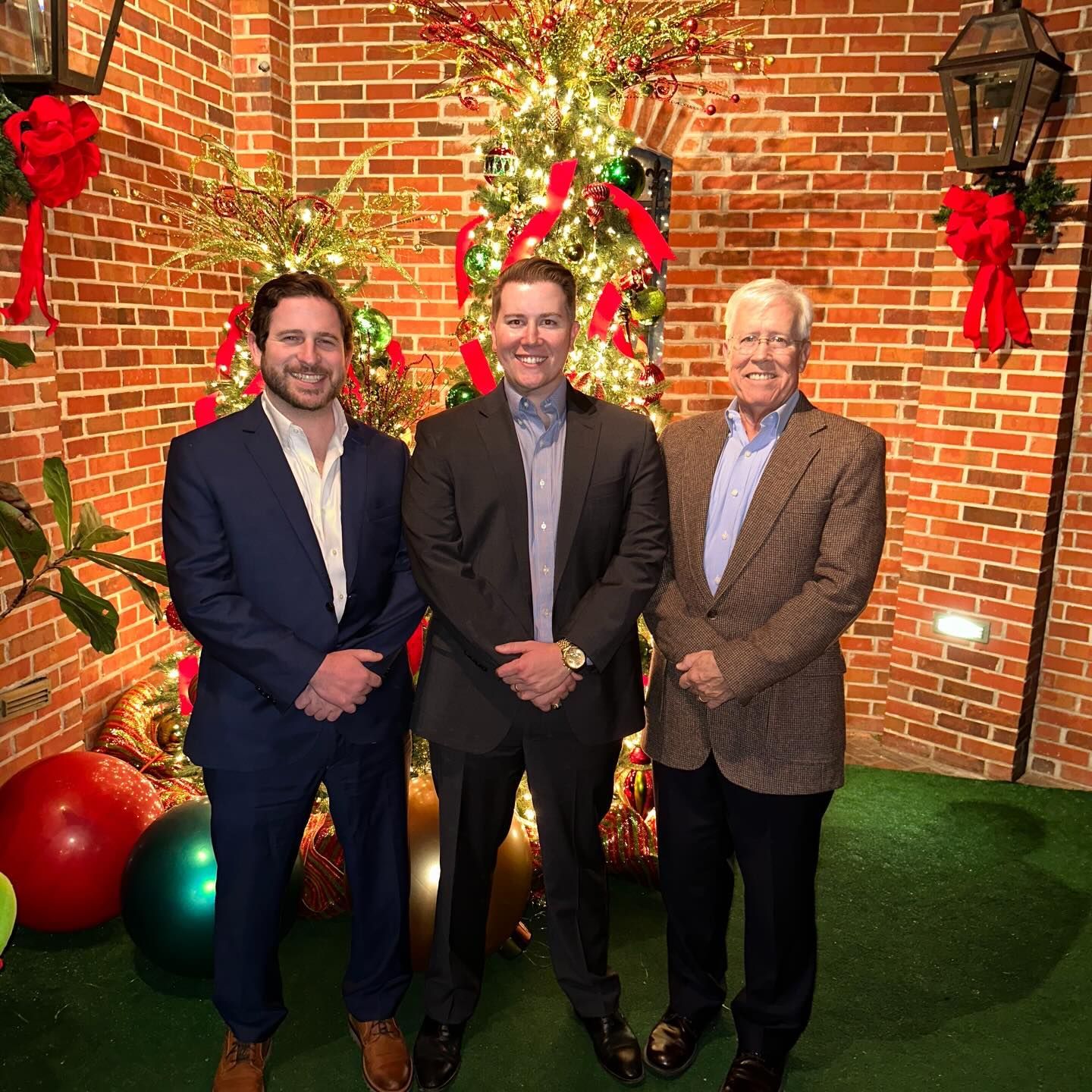
I'm Ryan J. Ehrhardt, owner and licensed agent at Chabert Insurance: The Ehrhardt Agency. I lead our team across our Mandeville and New Orleans offices, and I work with families and business owners every day to find coverage that fits their lives. I believe insurance should be simple to understand, so I take the time to explain your options in plain language before you decide.
As an independent agent, I answer to you, not to a single carrier. That means I can shop your policy across many companies and focus on what protects you best. When you call our office, you reach a real person who knows your account. I would be glad to review your coverage and help you feel confident about it.

[CONFIRM name]
Google review · Mandeville office
Home, Auto, Flood, Commercial & Life Insurance
Insurance built around your life in Louisiana
We compare coverage across many carriers and build one program that protects everything you own.
Home Insurance
Cover the cost to rebuild your house, replace your belongings, and answer a liability claim against your household.
Auto Insurance
Protect your vehicles with liability, collision, and uninsured motorist limits that hold up after a serious Louisiana wreck.
Flood Insurance
Your homeowners policy excludes flood. We quote NFIP and private options for your building and its contents.
Commercial Insurance
Liability, property, workers' compensation, and commercial auto for Louisiana businesses, priced against how your company operates.
Life Insurance
Replace the income your family depends on, with term and permanent options priced across several carriers.

Umbrella Insurance
Add a layer of liability protection above your auto and home limits, usually for a modest premium.
Ruston
Baton Rouge
Mandeville
Gretna
Louisiana Home Insurance
Home insurance built around where you live
Home insurance is our specialty. We write homeowners policies across Louisiana and price them against the wind, hail, and flood risk in your parish.
Areas we cover
[CONFIRM name]
Google review · Mandeville office
Business Insurance by Industry
Specialized coverage for your line of work
Every trade carries its own risks. We know the coverage these Louisiana businesses need and where the gaps usually sit.
Plumbers
Liability, tools, and commercial auto coverage built for water damage claims and job-site risk.
Restaurants
Property, liquor liability, and spoilage coverage for kitchens, dining rooms, and your staff.
Real Estate Investors
Landlord property, liability, and vacancy coverage for rentals, flips, and multi-unit buildings.
[CONFIRM name]
Google review · Mandeville office
How to Get Insured in 4 Steps
Getting covered is simple
You talk to a licensed agent from the first call to the annual review.
1
Tell us about you
Share what you want to protect. A licensed agent asks about your home, vehicles, family, or business and gathers the details carriers need.
2
We shop our carriers
We compare options across the markets we represent and look at price, coverage limits, and how each carrier handles claims.
3
Review your choices
We explain coverage and price in plain language, side by side, so you can see the trade-offs before you choose.
4
Get covered
Your policy starts, you get your documents, and we review the coverage with you each year.
5-Star Rated by Louisiana Clients
What our clients say
Louisiana families and business owners rate us 5 stars for clear advice and fast answers.
139+ five-star reviews across our Mandeville and New Orleans offices